
Peipsimaa | Peipsi Waterland
A large-format museum-ready cubist painting inspired by early 20th-century Picasso (analytical + synthetic cubism), set clearly in Estonia. The composition shows a fractured industrial landscape transforming into ecological restoration: angular oil-shale spoil heaps, broken conveyor structures, smokestacks, and abandoned Soviet-era industrial buildings on one side, gradually merging into wetland restoration, young birch trees, reed beds, and community-planted green corridors on the other side.This work builds on a long-standing tradition of environmental research and limnological monitoring. The observation of water levels in Lake Peipsi has been ongoing in Estonia for more than a century, with the first systematic measurements dating back to the late 19th century. Over decades, limnologists at the University of Tartu have documented fluctuations in water levels, creating a valuable dataset that allows for comparisons across different time periods and the identification of long-term trends.
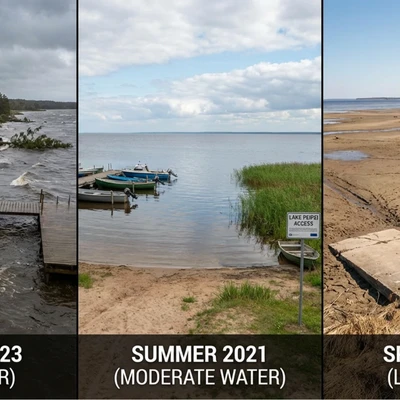
The inspiration for this work comes from the method of comparative environmental documentation, in which the same location is photographed at different times or under varying conditions to reveal changes over time. This visual comparison is particularly effective in communicating the impacts of climate change—three images placed side by side can convey the scale of change far more powerfully than a single image or written description. The work adopts the format of a scientific triptych, where three states presented together create a narrative of time, transformation, and vulnerability.
Peipsi Waterland pictue addresses one of the most visible and measurable impacts of climate change: water level variability in Europe’s largest transboundary lake. In recent years, Lake Peipsi has experienced extreme fluctuations. In 2025, water levels were nearly half a meter above average due to a particularly rainy summer, while in earlier years—most recently in 2015—significant low-water periods were recorded.
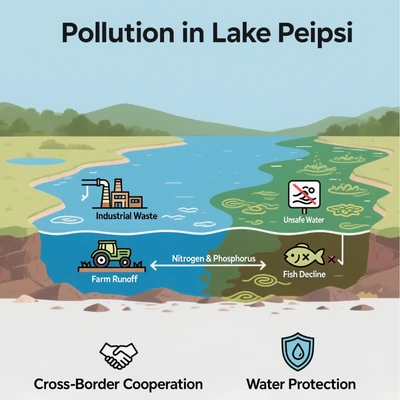
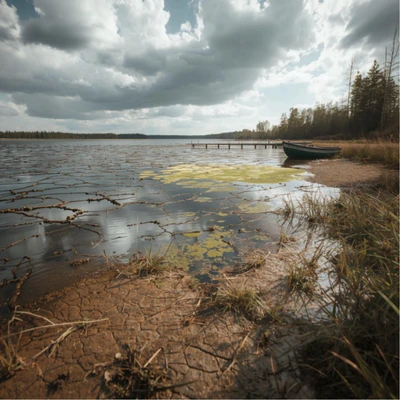
These fluctuations have complex effects on both ecosystems and human activities. High water levels, while inconvenient for coastal infrastructure, can benefit shallow-water ecosystems by improving fish spawning conditions, reducing fish mortality, limiting algal blooms, and enhancing overall water quality. Low water levels create challenges for fishers and recreational boaters and make swimming less comfortable, but do not in themselves cause fish die-offs. Conditions dangerous to fish are more likely to arise from the combination of heat and calm, windless weather.
Climate models predict that water level variability will become increasingly unpredictable in the future, with prolonged droughts alternating with intense precipitation and flooding events. This calls for adaptive solutions in infrastructure planning, fisheries management, and community resilience across the EU and neighbours.