
Peipsi ökoloogiline taastamine | Peipsi Revival
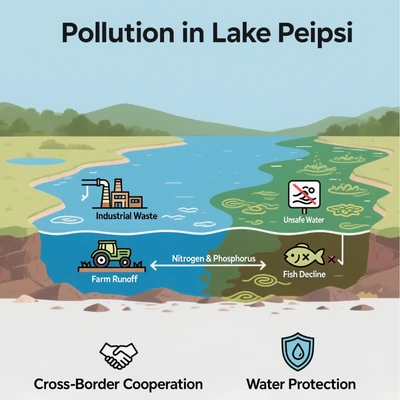
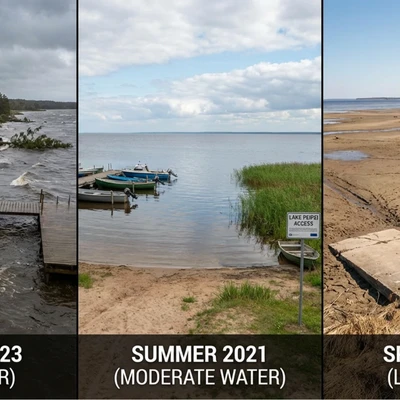
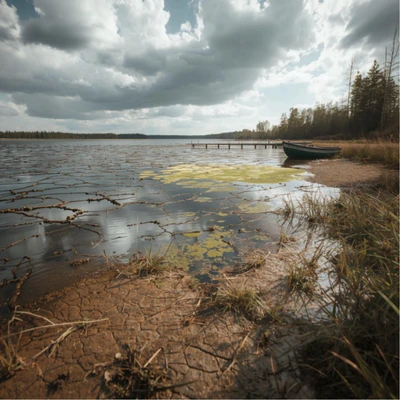
Peipsi Taastumine addresses transboundary water restoration in Lake Peipsi/Čudskoje, shared between Estonia and Russia. The lake faces eutrophication from agricultural pollution while supporting unique communities—including Russian Old Believer fishing villages maintaining centuries-old sustainable practices.
EU Integration Impact: Estonia's EU membership enabled sophisticated water monitoring and pollution reduction funding impossible at national scale. Citizen scientists shown reflect EU participatory environmental governance. Despite political tensions, the lake's ecology requires Estonian-Russian cooperation, subtly suggested through cultural elements (Old Believer boats, mixed architecture) without overt messaging.
Cultural-Ecological Connection: Old Believer traditional fishing practices align with modern ecosystem management, representing indigenous knowledge integration with contemporary conservation—and Estonian-Russian coexistence predating Soviet politics. The quiet mood reflects that aquatic restoration takes decades, requiring sustained commitment beyond political cycles.
Prompt:
"Large-format photorealistic painting inspired by 1980s Estonian landscape tradition and environmental documentation photography. Style blends Peeter Laurits' critical contemporary approach with classical Estonian nature painting.
Foreground: Lake Peipsi/Čudskoje shoreline with crystal-clear water revealing restored aquatic vegetation beneath surface. Native fish species (European perch, pike-perch, vendace) visible swimming in transparent water. Restored reed beds along shore in golden-green tones.
Middle ground: traditional Estonian/Russian Old Believer fishing boats, signs of sustainable fishing practices. Small figures in bright work clothes monitoring water quality, taking samples - suggestion of citizen science and EU-funded monitoring programs.
Background: restored wetlands extending to horizon, cleaned shoreline, native bird species (white-tailed eagles, cranes) returning to habitat. Soft atmospheric perspective showing depth. Sky with breaking clouds suggesting hope after storm.
Color palette: cool blues and greens of water, warm golden reeds, naturalistic skin tones, muted earth colors. Realistic lighting with soft diffused daylight characteristic of Estonian Baltic climate. Visible brushwork but highly detailed. Mood: quiet restoration, patience, cross-border cooperation. No text, no flags, but subtle suggestion of Estonian-Russian cultural coexistence through architectural and costume details."