Abandoned fish nets kill life
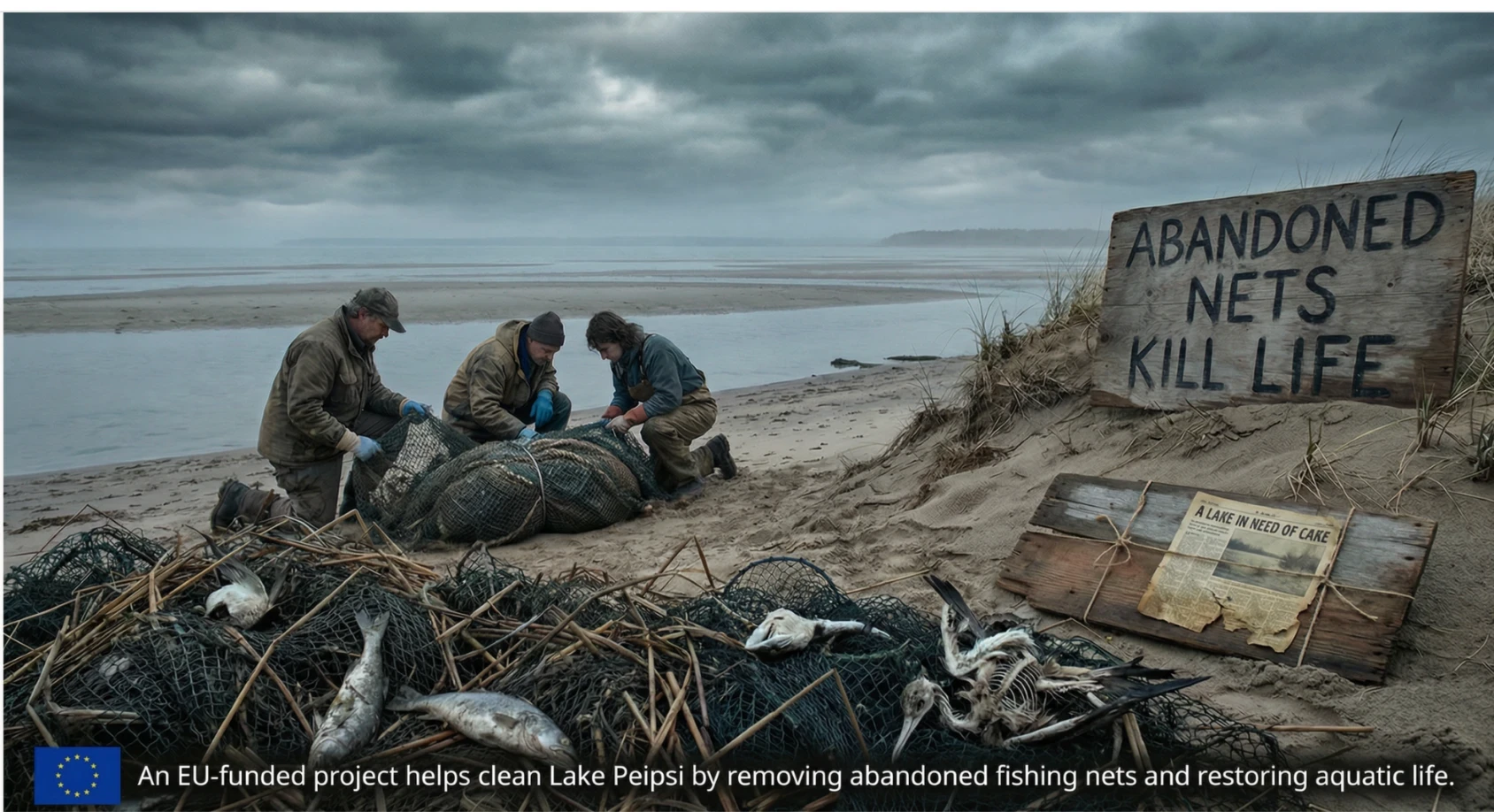
This AI-generated work was created to draw attention to the environmental impact of abandoned fishing nets in Lake Peipsi, share between Estonia and Russia.
Lake Peipsi, as Europe’s largest transboundary lake, represents both ecological richness and shared responsibility between neighboring countries.
Abandoned or illegal fishing nets continue to threaten aquatic ecosystems long after they are discarded. These “ghost nets” trap fish, birds, and other wildlife indiscriminately, causing silent and prolonged damage.
The work is motivated by the need to visualize an often invisible environmental problem. While pollution is frequently associated with plastic waste or industrial discharge, abandoned fishing gear remains less visible yet equally destructive. The image seeks to transform monitoring data and inspection reports into an emotionally accessible visual narrative. It highlights the human role in both causing and solving ecological degradation.
The presence of people removing nets symbolizes accountability, restoration, and collective action.
The shoreline setting emphasizes the fragile boundary between land and water ecosystems.
The dramatic sky reflects environmental urgency without resorting to sensationalism.
The sign “Abandoned Nets Kill Life” functions as a clear ethical and ecological statement.
It echoes real environmental awareness campaigns promoting sustainable fishing practices.
The work is also inspired by the EU Common Fisheries Policy, which promotes responsible resource management and combats illegal fishing. Funding instruments such as the European Maritime, Fisheries and Aquaculture Fund (EMFAF) support monitoring, control, and ecosystem restoration projects.
Cross-border cooperation frameworks help coordinate action in shared waters like Lake Peipsi.
EU environmental legislation, including the Water Framework Directive, sets standards for achieving good ecological status in inland waters. These policies recognize that prevention, enforcement, and habitat restoration must work together.
The image reflects how EU-funded initiatives contribute to removing ghost nets and strengthening inspection systems. Environmental protection in transboundary lakes cannot rely on one state alone; it requires coordinated European governance.
The work draws inspiration from documentary and forensic photography traditions that present evidence rather than spectacle. It adopts a factual visual language to communicate credibility and systemic responsibility.
Material traces — nets, skeletal remains, and debris — emphasize measurable ecological consequences.
Although generated through artificial intelligence, the image is grounded in real environmental challenges and policy frameworks.
Ultimately, the work stands as a call for sustained European cooperation to protect Lake Peipsi and preserve its biodiversity for future generations.